If you’ve ever tried to repair a high-end watch with parts from a different brand, you know that “high quality” doesn’t always mean “compatible.” In the world of talent acquisition, a brilliant resume is just a gear that might not mesh with your existing clockwork. Whether you are leading a corporate team or a specialized technical facility like Auto Industries Factory LLC, you’re likely feeling the strain of a hiring process that feels more like a lottery than a strategy. You’re likely seeing a flood of applicants, yet struggling to find qualified candidates who actually understand your mission and fit your specific culture.
It’s exhausting to manage rising recruitment costs while navigating a shifting legal landscape, including the nuances of the UAE Labor Law and regional compliance standards. We’re here to help you move beyond the noise. This article provides a masterclass in identifying and securing top-tier talent that aligns with both your organizational values and national governance. We’ll examine how to refine your sourcing techniques, implement competency mapping, and build a streamlined process that prioritizes human connection alongside professional excellence.
Key Takeaways
- Redefine what it means to be “qualified” by shifting your focus from static years of experience to a candidate’s demonstrated impact and cultural resonance.
- Build job descriptions that act as strategic filters, using competency mapping to help you find qualified candidates who are prepared for specific outcomes.
- Balance technical vetting with a compliance-first approach to ensure every hire meets national labor laws while aligning with your team’s unique pulse.
- Move beyond the limitations of public job boards by adopting multi-channel sourcing and specialized talent searches for your most critical roles.
- Connect your recruitment efforts directly to your performance management strategy, ensuring that new talent is positioned for immediate and sustainable growth.
Beyond the Resume: Defining a ‘Qualified Candidate’ in 2026
Consider the koi fish. Its size is determined not just by its genetics, but by the volume of the water it inhabits. If you place a high-potential fish in a cramped tank, it will never reach its full length. Hiring in 2026 feels remarkably similar. We often look for the “biggest fish” without asking if our organizational pond can actually support their growth. To truly find qualified candidates, we have to look past the static lines of a resume and see the interaction between the individual and the environment.
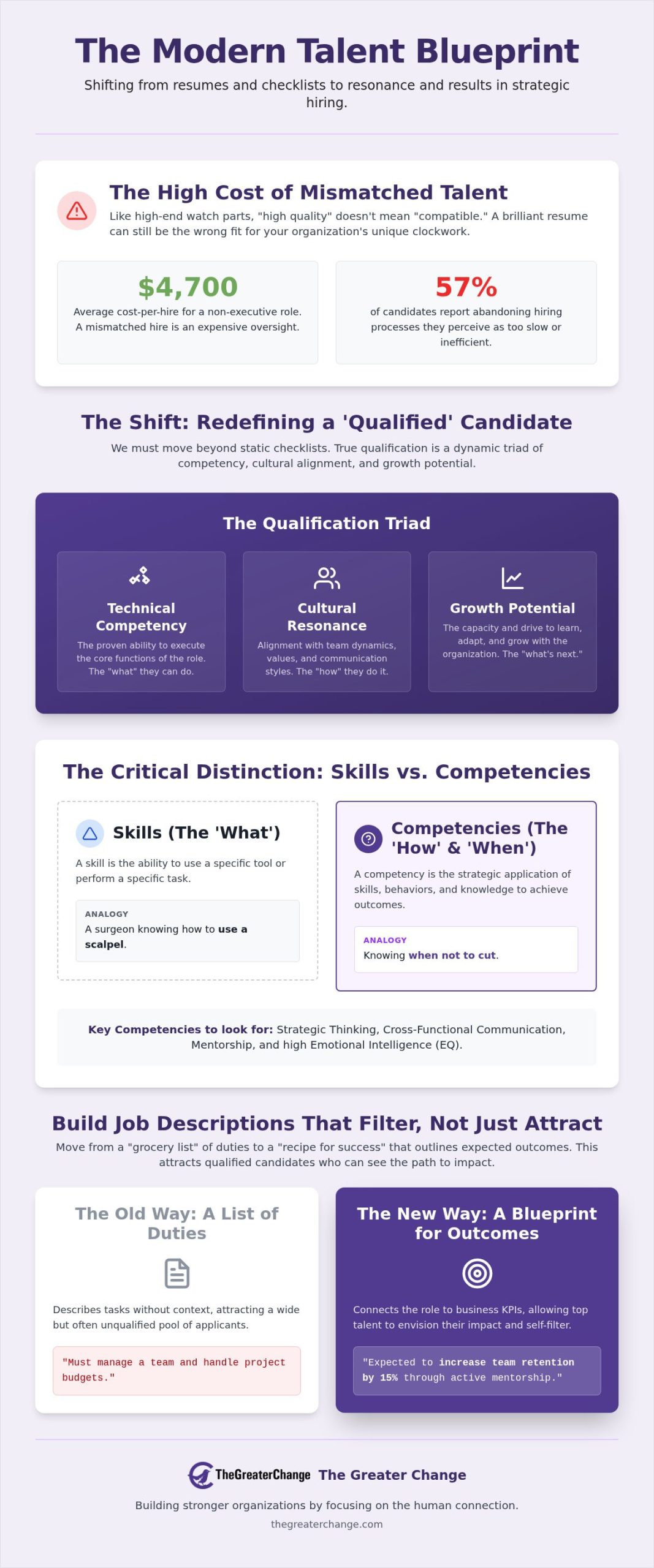
The traditional definition of a “qualified” person usually starts and ends with a checklist of requirements. However, the 2026 talent market demands more precision. With the average cost per hire for non-executive roles reaching approximately $4,700, a mismatched hire is an expensive oversight. We must define qualification as a triad: technical competency, culture fit, and growth potential. This shift moves us toward Human Capital Optimization. It’s not about just filling a seat; it’s about ensuring every person is positioned to make the highest possible impact while aligning with your broader HR governance.
The Difference Between Skills and Competencies
A skill is the ability to use a specific tool, like a surgeon knowing how to use a scalpel. A competency is knowing when not to cut. While Recruitment often focuses on the “what,” strategic hiring focuses on the “how.” A candidate might be highly skilled in software development but lack the competency of cross-functional communication. To identify core competencies for leadership, ask: “What behaviors drive success here?” Focus on strategic thinking and the ability to mentor others rather than just a list of past duties.
The Role of Emotional Intelligence (EQ) in Qualification
Technical skills get people through the door, but EQ keeps them in the room. In a landscape where 57% of candidates report abandoning slow hiring processes, your internal team’s EQ is just as vital as the candidate’s. You can spot EQ during screening by listening for “we” instead of “I” and observing how they handle unexpected questions. High EQ acts as the primary stabilizer for team dynamics, ensuring that professional talent remains engaged and committed even during periods of organizational friction. Take a moment to reflect: is your current vetting process designed to find a worker, or a teammate?
The Strategic Blueprint: Building Job Descriptions That Filter
If you’ve ever followed a recipe that simply listed “flour, water, yeast,” you know the frustration of not knowing if you’re making a sourdough loaf or a pizza crust. The ingredients are the same, but the intended outcome changes everything. Most job descriptions are just grocery lists. They tell the candidate what they need to bring to the kitchen, but they fail to describe the meal they’re expected to cook. To find qualified candidates, your job description must act as a strategic filter, not just a magnet for resumes.
The goal isn’t to attract the highest volume of applicants; it’s to attract the right ones. When you move from listing duties to outlining outcomes, you change the conversation. Instead of saying “must manage a team,” try “expected to increase team retention by 15% through active mentorship.” This clarity allows high-tier talent to see themselves in the role. It also serves as the first “automated” vet. Candidates who can’t see a path to those outcomes will often self-select out, saving you precious time and reducing your time-to-hire costs.
Competency Mapping: The Foundation of Every Role
Every role in your organization should be a direct response to a business KPI. If a role doesn’t have a clear line to a performance metric, it’s likely suffering from “role creep.” By utilizing The Greater Change’s competency mapping services, you can ensure that every position is realistically defined for the national market. This process clarifies expectations before the first interview even happens. It creates a blueprint that aligns individual performance with your broader organizational goals, turning a simple job into a strategic contribution.
Writing for Alignment, Not Just Attraction
Top-tier talent in 2026 isn’t just looking for a paycheck; they’re looking for an environment that mirrors their ethics. Your Employer Value Proposition (EVP) should be woven into the text, not buried in a footer. Speak honestly about your culture. If your environment is fast-paced and high-pressure, say so. If you value deep work and quiet focus, highlight that. Transparency regarding your KPIs and performance management builds trust early. Avoid generic corporate jargon. It sounds hollow and often alienates the very people who value authenticity and directness. Take a look at your most recent job posting. Does it read like a list of chores, or a call to achieve something meaningful?
Evaluating Fit: Culture, Competency, and Compliance
Imagine building a house on a plot of land without checking the title deed. You might have the finest cedar and a visionary design, but if the foundation sits on contested ground, the entire structure is precarious. Hiring works the same way. We often obsess over the “design” of a candidate’s personality or the “materials” of their skills while neglecting the legal ground they stand on. To find qualified candidates, you must balance technical brilliance with a rigorous commitment to governance. It’s not just about who they are; it’s about the framework that supports them.
National Labour Law: Building a Compliant Framework
Compliance isn’t a hurdle to be cleared; it’s a safeguard for your future growth. Every offer letter and employment contract must align with the National Labour Law compliance framework to protect both the business and the individual. Non-compliant hiring practices don’t just risk expensive fines. They erode the trust your organizational culture is built upon. A professional HR audit can reveal these hidden cracks before they become structural failures, ensuring your governance is as strong as your talent.
The ‘Culture Fit’ Myth-Busting
We need to be honest about what “fit” actually means. It’s not about finding someone who shares your hobbies or went to the same university. That’s a recipe for stagnation. Real fit is about shared ethics and integrity. Look for “culture-add” rather than just “culture-fit.” Ask yourself: does this person bring a perspective we lack while still honoring our core values? Behavioral interviews that focus on past actions in tense situations are far more revealing than hypothetical questions. Competence is proven through history, not just promised in an interview. Take a moment to reflect: are you hiring for comfort, or are you hiring for impact?
Multi-Channel Sourcing: Where the Best Talent is Hiding
Think about the last time you found something truly valuable. It likely wasn’t sitting on a crowded shelf in a big-box store. Not in plain sight. It was probably tucked away in a corner, discovered through a specific recommendation, or found in a place where others weren’t looking. Recruitment follows the same logic. If you rely solely on public job boards to find qualified candidates, you’re essentially shouting into a gale. You’ll hear plenty of noise, but you’ll rarely catch the subtle notes of the exact talent your organization needs.
Tapping into the Passive Candidate Market
Passive candidates are the “hidden gems” of the professional world. They aren’t scrolling through job feeds at midnight; they’re open to the right conversation, but they won’t initiate it. Tapping into this market requires ethical headhunting and direct, human-centric outreach. These individuals often represent a higher qualification level because their skills are being actively utilized and sharpened in real-time. Reaching them isn’t about a sales pitch. It’s about a strategic invitation to a better-aligned future.
Leveraging Success-Based Talent Search
Identifying these hidden professionals requires more than just a LinkedIn Premium account. It requires a partner who understands the nuances of the national landscape and the specific ethics of your industry. A professional talent search partner doesn’t just find names; they find fit. This expertise is essential to find qualified candidates who are not actively browsing job boards but are perfect for your culture. By utilizing The Greater Change’s Talent Search commissions, you align your incentives with an expert who only succeeds when you do. This success-based model ensures that you aren’t paying for a process, but for a result that strengthens your organizational governance. If you’re ready to move beyond the noise, partner with us for a success-based talent search to secure your next high-impact leader.
Professional Talent Search: Scaling with Expert HR Guidance
If you’ve ever watched a master gardener, you’ll notice they spend very little time looking at the seed. Instead, they examine the soil. They check the pH levels, the drainage, and the light. They know that even the most perfect seed will wither in the wrong environment. In business, we often spend all our energy on the “seed”—the candidate—while ignoring the “soil” of our own organizational structure. To find qualified candidates who actually stay and thrive, we must stop viewing recruitment as a one-off transaction and start seeing it as the vital beginning of a long-term relationship.
A successful hire is not just someone who can do the job today. It is someone whose growth is intentionally mapped to your company’s future. By integrating your talent search with KPIs and performance management, you ensure that new hires aren’t just joining a team; they’re entering a system designed for their success. This alignment creates a sense of stability that benefits everyone. It moves the organization from a reactive state of “filling holes” to a proactive state of building a workforce with professional grace.
The Greater Change: Your Strategic Recruitment Partner
We approach organizational management through a lens of human connection and sophisticated strategy. Our work blends a deep understanding of local regulatory standards with the latest global HR trends. We don’t just provide a list of names. We act as a Visionary Consultant, helping you architect a culture where talent and integrity meet. If you are ready to move beyond administrative tasks and toward transformative strategy, we invite you to optimize your operations through an expert Talent Search.
Next Steps: From Vacancy to Value
Professionalizing your hiring process begins with a clear-eyed look at your current state. Before you launch your next major recruitment drive, consider an HR Audit & Governance review. This ensures your foundation is compliant and your goals are realistic. It’s about moving from the pressure of a vacancy to the long-term value of a dedicated professional. Are you ready to build something that lasts? You can partner with The Greater Change for your next talent search to ensure your next hire is a catalyst for mutual growth.
Building Your Strategic Talent Architecture
Think of a well-placed anchor in a shifting tide. It doesn’t stop the water from moving, but it ensures the ship stays exactly where it needs to be. Hiring the right person is that anchor for your business. We’ve discussed how defining qualifications through impact, mapping competencies to KPIs, and maintaining a compliance-first mindset can stabilize your growth. To find qualified candidates in 2026, you must look for the human alignment that a resume simply cannot capture.
True success comes from treating recruitment as a strategic investment rather than an administrative hurdle. By focusing on “culture-add” and tapping into the passive talent market, you build a team that is resilient and ready for the future. We are here to guide that process. With our expertise in national labour law compliance and tailored HR solutions for SMEs, we provide the steady hand your organization needs. Our success-based recruitment commissions mean we are fully invested in finding the right fit for your unique culture.
Secure your organization’s future with The Greater Change’s Talent Search. Let’s work together to turn your next vacancy into your greatest organizational value.
Frequently Asked Questions
How do I find qualified candidates for highly specialized roles?
To find qualified candidates for specialized roles, you must look beyond the pool of active job seekers. Direct outreach to professionals who are already achieving results in similar environments is the most effective strategy. This proactive approach allows you to engage with talent based on their proven impact rather than their current employment status. It’s about cultivating relationships in niche professional circles before a vacancy even becomes urgent.
What is the most effective way to vet for culture fit without bias?
The most reliable method is to replace the vague idea of “fit” with a structured “culture-add” framework. Instead of gauging personal likability, focus your interviews on shared values and ethical decision-making. Use behavioral questions that require candidates to describe how they’ve handled real-world tensions in the past. This shifts the focus from shared backgrounds to shared integrity, ensuring your team grows in perspective while remaining unified in its mission.
How does national labour law affect the recruitment process?
National labour law establishes the essential legal boundaries for your offer letters, employment contracts, and workplace policies. Failing to align your process with these regulations can result in significant financial penalties and long-term damage to your professional reputation. A compliant-first approach doesn’t just prevent litigation; it provides a transparent and fair structure that builds trust with every new hire from day one.
Why should I use a talent search agency instead of just posting on job boards?
A talent search agency helps you find qualified candidates who aren’t actively scrolling through public job feeds. While job boards generate a high volume of noise, an agency provides the precision of strategic headhunting and deep vetting. This saves your leadership team from the exhausting process of sifting through hundreds of mismatched applications. It’s the difference between waiting for talent to find you and actively securing the best talent in the market.
What are the common mistakes small businesses make when hiring?
Small businesses often hire for immediate relief rather than strategic growth. They frequently skip the vital step of mapping a role’s duties to specific business KPIs, which leads to “role creep” and employee frustration. Another frequent error is neglecting to update hiring documents to meet current national standards. These oversights often result in poor retention and high hidden costs that can stifle a growing company’s momentum.
How can competency mapping improve my hiring success rate?
Competency mapping creates a logical link between your organizational goals and the specific behaviors needed to achieve them. It removes the guesswork from the interview process by providing a clear, objective scorecard for every candidate. When you understand the exact competencies that drive success in your unique environment, your hiring accuracy improves. This clarity leads to higher performance levels and much stronger long-term retention.
What is a success-based recruitment model?
A success-based recruitment model means that the service fee is only earned once a candidate is successfully placed and starts their new role. This structure ensures that your interests and the recruiter’s incentives are perfectly aligned. The focus stays on finding a candidate who will thrive in the long term rather than just filling a vacancy quickly. It’s a low-risk, high-accountability way to access expert talent search services.
How long should a professional recruitment process take in 2026?
In 2026, the average time-to-fill a position across all industries is approximately 44 days. While you might feel pressure to hire quickly, a thorough process involving competency mapping and cultural vetting typically requires six to eight weeks. Rushing the timeline often leads to expensive hiring mistakes and poor culture fit. A steady, methodical pace allows for the reflection and due diligence required to secure truly exceptional talent.